Comparing Multiple Indicators Without Overloading Charts
The urge to add indicators accumulates in a way that most traders only recognize in hindsight. At the start of a trading career, the chart is bare and every new indicator appears to offer additional insight that will bridge the gap between uncertainty and confidence. As time passes, layer after layer is added until the price action, which should be the primary subject of analysis, becomes obscured by the analytical apparatus built around it. Reducing that cluttered appearance to a clean, intentional layout is one of the most productive simplifications a trader can make, and it is nearly always more productive analytically than the cluttered setup it replaces, not because fewer indicators are inherently superior, but because each indicator that remains carries clearer meaning when it is not competing with a dozen others.
The most common form of indicator redundancy is the accumulation of multiple tools that measure the same underlying price relationship through slightly different mathematical expressions, a problem that would be avoided by understanding what each indicator actually measures before adding it to a chart. All momentum oscillators are derived from price data, and placing several of them on the same chart does not provide independent insights into market conditions. It offers a single perspective expressed multiple times, and the apparent agreement between them reflects mathematical correlation rather than genuinely independent confirmation. Selecting one oscillator suited to the trader’s analytical style and the market being traded is more effective than maintaining a collection of tools that reinforce each other’s signals without providing any analytical value beyond what a single instrument already offers.
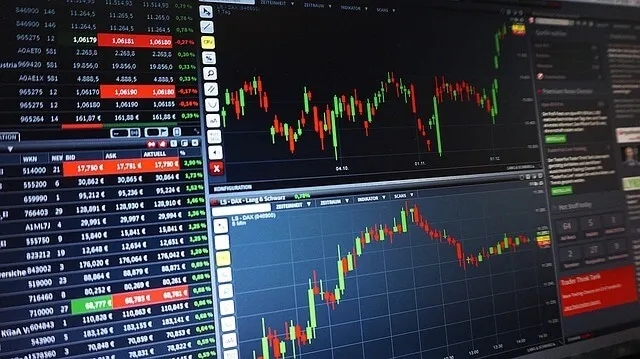
Image Source: Pixabay
Functional categorization enables a more effective indicator selection by eliminating overlap and ensuring that the chart addresses genuinely distinct analytical questions. By grouping available indicators according to what they measure, trend direction, momentum, volatility, and volume, and selecting one representative from each category, a configuration is established in which each element on the chart contributes information unavailable from the others. A trend following moving average, a momentum oscillator, a volatility indicator, and a volume indicator cover a unique part of price action and do not overlap, providing the trader with an authentic multi-dimensional perception of the market conditions instead of four versions of a single measurement. The TradingView charts facilitate this type of structured arrangement, with indicators grouped together by name, and layout templates saved so that it is easy to have a disciplined, non-redundant configuration across multiple instruments and sessions.
The effect of indicator overcrowding is a decrease in the quality of analysis that is hard to measure but easy to observe once one has used both a cluttered and uncluttered chart layout. When several oscillators occupy the space beneath the price chart, each with its own scale, color scheme, and line movements, the eye cannot effectively process the relationships between them. Signals that are clear in isolation become ambiguous against a background of competing visual information, and the analytical bandwidth consumed by processing visual complexity is bandwidth that would otherwise be available for reading price action itself. Reducing the indicator panel to the minimum configuration that genuinely serves the analytical need releases that bandwidth for the price observation that actually drives trading decisions.
Price chart overlay indicators such as moving averages, Bollinger Bands, and volume-weighted average price present different visual management challenges than oscillators displayed on separate panels. When the number of overlays on the price action is too large, it becomes hard to read each and every candle, spot swing points, or even draw support and resistance lines without indicator lines crowding the price data. Reduction of overlays to two or three, chosen consciously to the analytical purposes to which they are to be put, and placed so as to cause as little visual disturbance to price as possible, preserves the clearness of price action, and gives the sense of direction and volatility insight which is the best that overlays can give.
One trader described conducting a systematic indicator audit following a period of underperformance and found that his chart reading had actually slowed and his accuracy declined as his configuration had grown more complex. He listed every indicator in his setup, defined the analytical question each was meant to answer, and identified which tools were addressing the same question. The audit revealed that seven of his twelve indicators were generating information already provided by other elements of his setup, and that removing them immediately improved the speed and confidence of his chart reading without altering the substance of his analytical system. The TradingView charts made that audit process simple, as it was easy to turn individual indicators on and off in real time and the trader could evaluate the effect of each removal on the chart clarity before committing itself to a leaner permanent setup.
Periodically checking the settings of indicators would make sure that the tools being used are reflective of the current analytical needs and not the experiments of the past that have not been deleted. A volatility indicator added during a period of elevated market volatility may serve no meaningful purpose during a low-volatility trending environment, yet continues to occupy screen space and analytical attention without contributing to current decisions. The lean, purposeful indicator configuration that produces the clearest chart reading and the most confident, rapid analytical responses when market conditions demand immediate action is maintained by treating the indicator configuration as a living set of purposeful tools rather than an archive of past experiments.

Comments